Our Most Detailed Knowledge of Uranus and Neptune Comes From:
E ground based visual telescopes. Because of their great distance from Earth and the interference of the Earths atmosphere telescopes are of limited use in gathering scientific information about these planets.

This Is What Your Zodiac Sign S Ruling Planet Reveals About You Uranus Planets Nasa
Our most detailed knowledge of Uranus and Neptune comes from.
. The most detailed information about the gas giants has come from 1 the Voyager 1 and 2. Mark your answers on both the scantron and. The ice giant planets Uranus and Neptune represent an important and relatively unexplored class of planet.
161 1 Our most detailed knowledge of Uranus and Neptune comes from spacecraft exploration 2 In terms of axial tilt which of the jovian planets shows us the largest inclination. The opposition is focused more on your outer relationships with people although inner projections are often the key to their problematic nature. When this doesnt work you are inclined to storm off on your own leaving others wondering what will happen next.
Practice all cardsPractice all cardsPractice all cardsdone loading. Our solar system consists of our star the Sun and everything bound to it by gravity the planets Mercury Venus Earth Mars Jupiter Saturn Uranus and Neptune. C ground based radio telescopes.
The legacy of the Voyager mission still dominates our knowledge of the Uranus and Neptune ring-moon systems. As with the square aspect there is the presence of the unconscious mind being activated by a frustrated Neptune which lead to distortions in action and expression. Our most detailed knowledge of Uranus comes from.
Our most detailed knowledge of Uranus and Neptune comes from. It has a mean distance from the Sun of 287 billion kilometers 178 billion miles. Test 3 Solar System Astronomy Spring 2019 Name _ Part 1 Multiple Choice.
In terms of axial tilt which of the Jovians shows the largest inclination. Roughly the same size. Named after the Roman god of the sea- Neptune aka.
Our knowledge of the gas giant planets comes from two sources ground based telescopes and spacecraft. January 6 2021. While they may not get as much attention as the more popular planets closer to the Sun each is unique in its own mysterious way.
Uranus and Neptune are the archetypes of ice giants a class of planets that may be among the most common in the Galaxy. The disintegration of a short period comet over many returns to the Sun. They hold the keys to understand the atmospheric dynamics and structure.
Uranus 3 At which planet can the pole remain in darkness for 42 years then have 42. Voyagers cameras also first revealed eleven small inner moons at Uranus and six at Nep- tune. Compared with Uranus the planet Neptune is.
The only spacecraft to have visited Uranus and Neptune was. D ground based radio telescopes. The planetary system we call home is located in an outer spiral arm of the Milky Way galaxy.
William Herschel thought he has found a comet when he spotted the green disk of. Most of our detailed information about them comes from fleeting looks by the Voyager 2 spacecraft in the 1980s. Neptune is within two degrees of Capricorn and your Ascendant line within 1 deg making them both cusps thereby retaining the a.
Which three played a role in the. Our most detailed knowledge of Uranus and Neptune comes from. The spacecraft Cassini went into orbit around.
That legacy includes the first clear images of the nine narrow dense Uranian rings and of the ring- arcs of Neptune. Uranus -天王星 the star of the king of the sky. B the Hubble Space telescope.
Im not sure who does your calculations but by the charts I use it actually seems that your ascendant lies in Aquarius with Uranus Neptune and Ketu. The only spacecraft to have visited Uranus and Neptune was. 5 years ago.
It was discovered by William Herschel in 1781. 1781 Neptune- 海王星 the star of the king of the sea. It has an equatorial diameter of 51800 kilometers 32190 miles and orbits the Sun once every 8401 Earth years.
C ground based visual telescopes. Beyond the orbit of Saturn in the cold and dark depths of the outer Solar System lie the giant planets Uranus and Neptune along with a dwarf planet and the former ninth planet in the Solar System Pluto. Our most detailed knowledge of Uranus and Neptune comes from.
Named after the ancient Greek deity of the sky- Uranus. Meteor shower debris is believes to come from. Answer 1 of 7.
View Test 3 Key Astronomydocx from ASTR 1303 at Austin Community College District. Our most detailed knowledge of Uranus and Neptune comes from. Our most detailed knowledge of Uranus and Neptune comes from.
Uranus is the seventh planet from the Sun and is the third largest in the solar system. B the Hubble Space telescope. You dont handle frustrations in career and rather than collaborating with others or taking the time to come to an understanding you will instead intellectualize everything.
Uranus square Midheaven. Dwarf planets such as Pluto. And millions of asteroids comets and meteoroids.
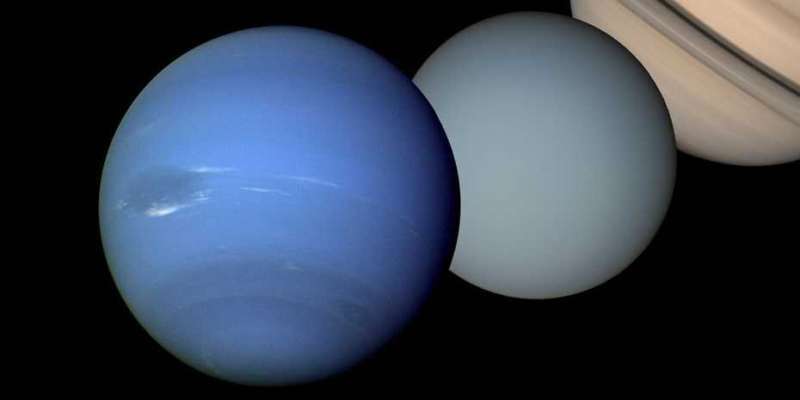
Earthsky New Water Clues On Uranus And Neptune

Mysterious Uranus And Why We Need To Put An Orbiter Around It Uranus Astronomy Space And Astronomy
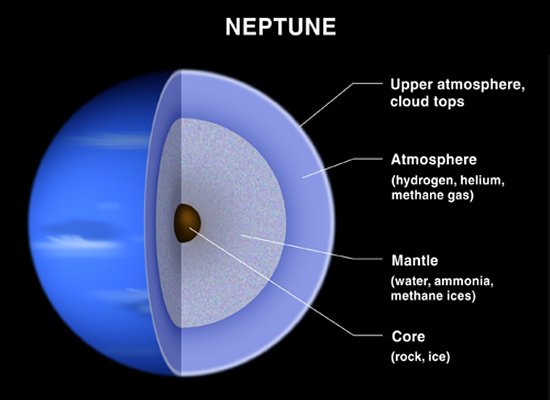
Nov 18 Uranus Neptune


Comments
Post a Comment